Atrial fibrillation, or AFib for short, is a heart condition that affects millions of people worldwide. In fact, according to the American Heart Association, as many as 2.7 million Americans are living with this condition. It’s a common condition that can cause a range of symptoms and can have serious consequences if not managed properly. In this blog post, we’ll explore what atrial fibrillation is, its symptoms, causes, and treatment options.
What is Atrial Fibrillation?
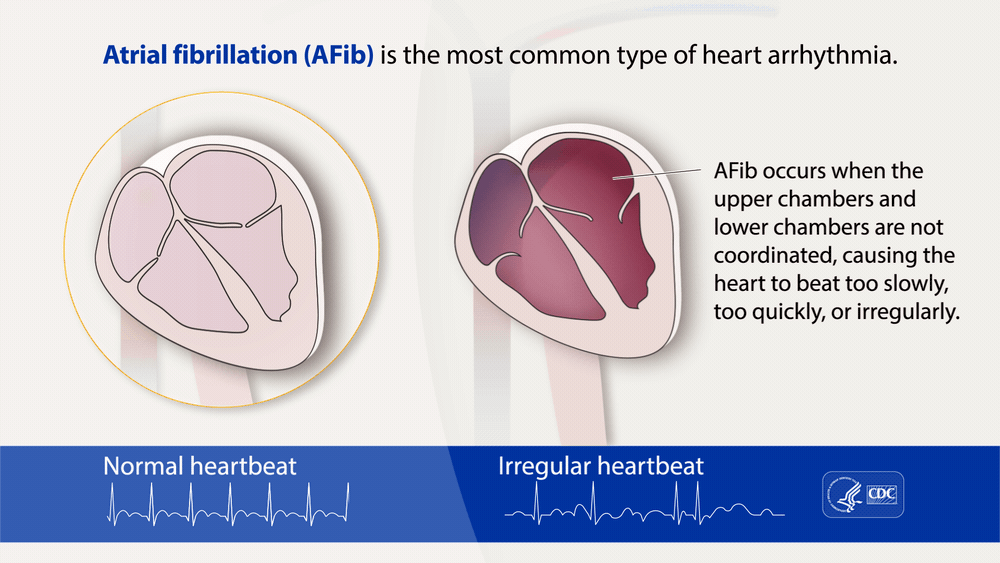
Atrial fibrillation is a heart condition that affects the rhythm of the heart. Normally, the heart beats in a regular pattern, but in AFib, the heart’s upper chambers (the atria) beat irregularly and out of sync with the lower chambers (the ventricles). This can cause blood to pool in the atria, which can increase the risk of blood clots forming. If a clot travels to the brain, it can cause a stroke.
 Symptoms of Atrial Fibrillation
Some people with AFib have no symptoms at all, while others experience a range of symptoms. These can include:
- Irregular or rapid heartbeat
- Heart palpitations (a feeling of fluttering or pounding in the chest)
- Shortness of breath
- Fatigue or weakness
- Dizziness or lightheadedness
- Chest pain or discomfort
- Causes of Atrial Fibrillation
There are many factors that can contribute to the development of AFib, including:
- High blood pressure
- Heart disease
- Diabetes
- Thyroid problems
- Sleep apnea
- Alcohol or drug use
- Obesity
- Family history of AFib
- Treatment Options for Atrial Fibrillation
Treatment for AFib will depend on the severity of the condition and the individual’s overall health. Treatment options may include:
- Medications: There are several types of medications that can be used to manage AFib, including blood thinners, antiarrhythmic drugs, and rate control medications.
- Cardioversion: This procedure involves using electrical shocks or medications to restore the heart’s normal rhythm.
- Ablation: This is a procedure that uses radiofrequency energy to destroy small areas of heart tissue that are causing the irregular heartbeat.
- Surgery: In some cases, surgery may be necessary to treat AFib. This may include a maze procedure, which involves creating scar tissue in the heart to redirect electrical signals and restore a normal heartbeat.
There are several medications that may be used to manage atrial fibrillation (AFib), a common type of irregular heartbeat. Here are some examples of medications that may be used:
- Anti-arrhythmic medications: These medications help to regulate the heart rhythm and prevent AFib episodes. Examples of anti-arrhythmic medications include amiodarone, sotalol, and flecainide.
- Beta blockers: Beta blockers help to slow the heart rate and reduce the workload on the heart. Examples of beta blockers used for AFib include metoprolol and carvedilol.
- Calcium channel blockers: These medications can help to slow the heart rate and improve the heart’s ability to pump blood. Examples of calcium channel blockers used for AFib include diltiazem and verapamil.
- Blood thinners: Blood thinners, also known as anticoagulants, are used to reduce the risk of blood clots and stroke associated with AFib. Examples of blood thinners used for AFib include warfarin, dabigatran, and apixaban.
- Rate control medications: These medications are used to control the heart rate during AFib episodes. Examples of rate control medications include digoxin and beta blockers.
There are several procedures that may be used to manage atrial fibrillation (AFib), a common type of irregular heartbeat. Here are some examples of procedures that may be used:
- Catheter ablation: This procedure involves using a catheter to deliver energy to the heart tissue that is causing the abnormal heart rhythm. The energy can destroy or isolate the problematic tissue, restoring a normal heart rhythm.
- Cardioversion: This procedure involves using electrical shocks to restore a normal heart rhythm. It can be done as an outpatient procedure or during a hospital stay.
- Maze procedure: This procedure is done during open-heart surgery and involves creating a pattern of scar tissue on the heart that redirects the electrical signals and restores a normal heart rhythm.
- AV node ablation: This procedure involves destroying the AV node, a cluster of cells that regulate the electrical signals that control the heartbeat. After the AV node is destroyed, a pacemaker is implanted to regulate the heart rhythm.
- Left atrial appendage closure: This procedure involves using a small device to close off the left atrial appendage, a small sac in the heart where blood can pool and potentially form clots. Closing off the appendage can reduce the risk of blood clots and stroke in people with AFib.
It is important to note that the specific procedures used to manage AFib may vary based on an individual’s health status and other factors. Treatment plans for AFib typically involve a combination of medication and procedures to manage symptoms and reduce the risk of complications. If you have concerns about your AFib symptoms or treatment plan, speak with your healthcare provider.
Living with Atrial Fibrillation
While there is no cure for AFib, there are steps that can be taken to manage the condition and reduce the risk of complications. These can include:
- Managing other health conditions, such as high blood pressure or diabetes
- Avoiding triggers, such as caffeine or alcohol
- Eating a heart-healthy diet
- Exercising regularly
- Quitting smoking
- Taking medications as prescribed
- Monitoring the heart regularly with a wearable heart monitor or other device
In conclusion, atrial fibrillation is a common heart condition that can cause a range of symptoms and can have serious consequences if not managed properly. If you are experiencing any symptoms of AFib, it’s important to speak with your doctor. With proper management and treatment, many people with AFib are able to live healthy, active lives.